

“Spark” Program
Applicant’s Guide
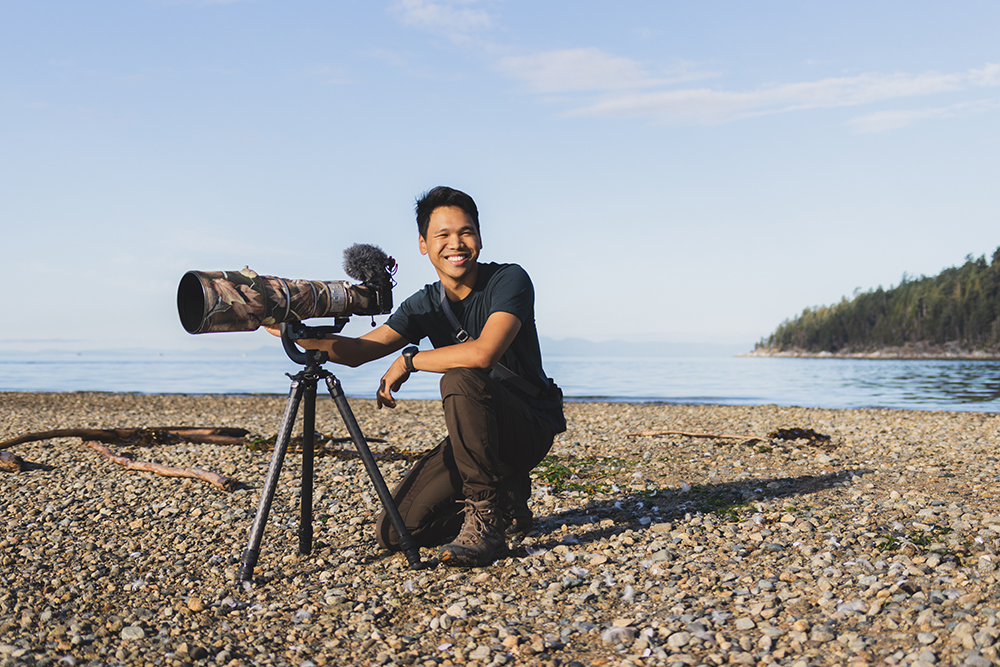 Kris Cu Nature Photography – 2023 Winner – Surrey, BC
The “Spark” Program matches selected candidates with a mentor and provides seed funds to help take new tourism ideas to the next level of development.
On this page you’ll find information about the application process, and tips to help you put your best foot forward. Please note that some requirements and offerings may change from program to program. Make sure to carefully review the details of the specific program you’re applying to.
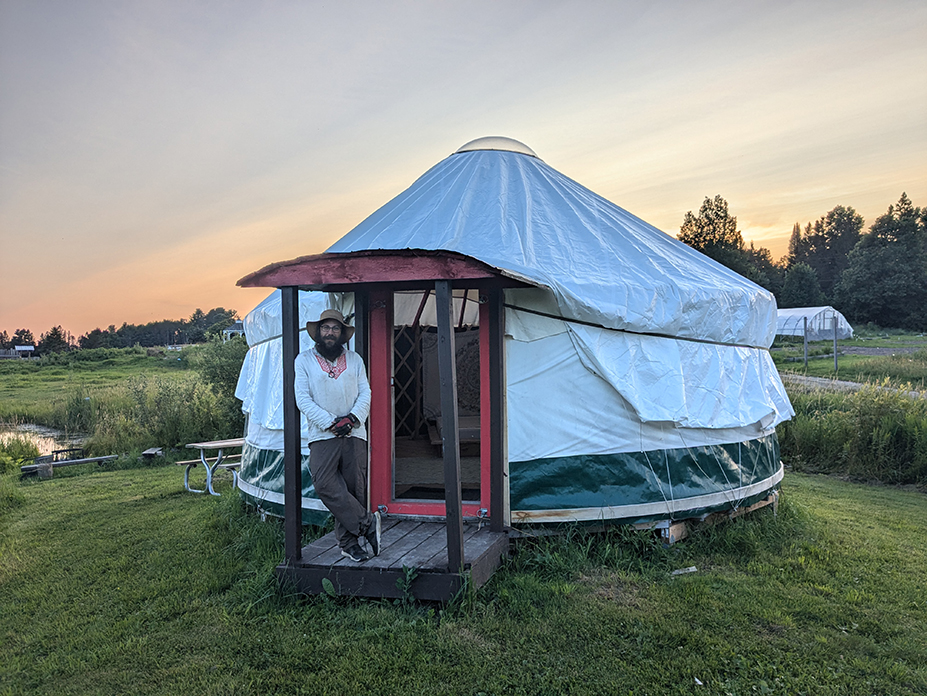 Matthew Larivee, Foxfire Heritage Farm, Powassan, Ontario. 2021 “Spark” Participant.
How “Spark” Applications Work:
Click on the application element to be taken directly to the details
Stage One
Everyone interested in participating in the “Spark” program must complete and submit both of the following in order to be considered for Stage Two
10 Answers
To questions about you and your idea
60 Seconds
Of video recorded on your phone
Stage Two
After review by our application jury, a shortlist of finalists are invited to participate in our live pitch session
Pitch
Your project to a panel of judges
Respond
To questions from the judging panel
Finalists are offered a virtual coaching session ahead of their live pitch. Pitch sessions are held virtually or in-person, depending on the program. Check specific program details for more information.
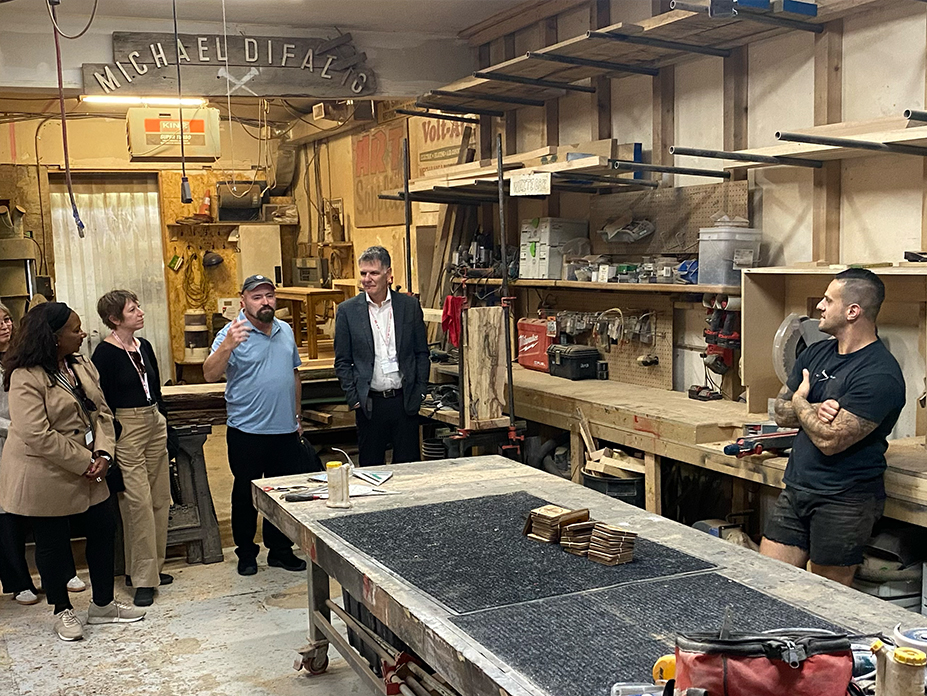 Michael Difazio Reclaim Artistry, Windsor, Ontario. 2018 “Spark” Participant.
Standard Application Questions
Section A: About You
Question |
Guidance |
|---|---|
|
Applicant name (first and last)* |
If applying on behalf of a business, organization, or group, enter the name of the person who will be the main contact |
|
Business/ Organization/Project name* |
If applying as an individual, provide a name for your project. Otherwise, list the name of your business, organization, or group. |
|
Business/ Organization/Project website |
A public social media page is acceptable. This question is not required. |
|
Phone number* |
Recommend using a direct number for the person listed above. This is how TIL staff will contact you with news about your application. |
|
Email address* |
Recommend using a direct contact for the person listed above (rather than a generic company email). This is how TIL staff will contact you with news about your application. |
Section B: About Your project
* indicates a required question
All questions have a 500 character limit (roughly 3 – 4 short sentences), unless otherwise specified
Question |
Guidance |
|
|---|---|---|
|
1 |
Tell us about yourself, your small business, community group, or non-profit organization.* |
Tell us what you do and what you’re passionate about. Share information about your background, current activities, or anything else that will help us to get a sense of who you are. |
|
2 |
Describe your new tourism idea.* |
Tell us what you dream about building, offering, or creating. |
|
3 |
How is your idea innovative or unique?* |
Let us know whether you’re introducing a completely new concept or putting a fresh spin on something existing. Think about why a visitor might choose your product or experience over another. |
|
4 |
What stage are you at with your idea?* |
Be honest about your progress! We welcome brand new ideas that are barely out of the starting gate. |
|
5 |
What challenges are you encountering with your idea?* |
Share examples of what is preventing you from moving your project forward – think about funding, timing, or administrative hurdles, as well as anything else that’s holding you back. |
|
6 |
Who is your ideal visitor or customer?* |
Write about the people you imagine enjoying your final experience or product. |
|
7 |
Who would make an ideal community partner?* |
We can get more done together! So tell us, if you could get anyone else involved in your project who would it be? Think about businesses, community groups, even government. No ambition is too high! |
|
8 |
What is the approximate total cost of your project?* |
This doesn’t need to be perfect. Just give us your best estimate of what it would cost to bring this idea to life. |
|
9 |
If selected, how would you utilize the seed funds?* |
No spreadsheet required, we just want a sense of where the money would go. |
|
10 |
What do you hope to achieve with this idea?* |
Think about the ripple effect of your project, and tell us about how the future will be better because of it. |
Requirements
- All applications must include a video in order to be considered
- Video must be between 30 and 60 seconds
- Videos that have been edited or include extra production elements (such as green screen or titles) will not be considered
- details on submission options
Recommendations
- Keep it simple – use your phone!
- Plan what you’re going to say ahead of time
- Record multiple takes and submit the best one
- Watch the video before uploading – make sure the audio is clear and your face can be seen
- Use this time to introduce yourself, your small business/organization/non-profit, and your new tourism idea.
FAQs
Definitions & Examples
Your Application & Personal Information
By submitting an application you agree that all of the information contained in your application is complete and accurate. You also consent that the Tourism Innovation Lab and partners may collect the personal information contained herein within the application review process and for future program related communications. Your application will be kept confidential during the review period. All review jury and judge panel decisions are final and cannot be appealed.
All grant recipients are subject to our Terms and Conditions.
Hackforge & the Tourism Innovation Lab are located in the University of Windsor’s Advanced Computing Hub
300 Ouellette Ave, Unit 210
Windsor, Ontario, Canada
N9A 7B4
info@hackf.org
888-960-7641 ext. 4

is proud to be a program of
© 2026 Tourism Innovation Lab. A program of Windsor Hackforge. All rights reserved.